

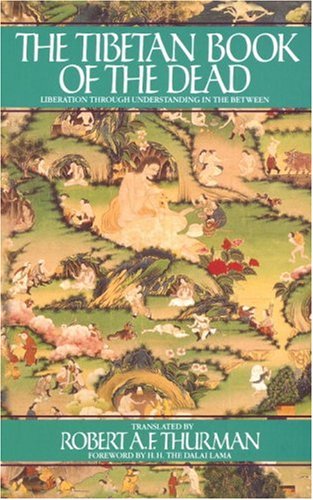
When I was about 5 years old, I remember occasionally lying awake in bed at night with my eyes closed imagining what the experience of death would be like. I would vividly envision piercing assaults from sharp silver blades, my cherry red blood cascading from cavernous gashes across my abdomen and jugular, agonizing shrieks into the night… Just kidding, I wasn’t that “imaginative” (still not). All I pictured was darkness, silence, and loss of thought. The only difference between death and sleeping would be that it would last a really really long time. But then again, if I could no longer think then maybe it wouldn’t feel like that long after all. It really didn’t seem that bad.
Growing up in a non-religious household, I never possessed a fundamental fear of suffering in some eternal afterlife. Yes, death would be painful and suck bananas in general, but if dissolving into an empty void was my fate then it didn’t seem to matter that much. Rather than fear, that thought eventually morphed into something completely different: apathy. In high school that feeling led me through some pretty dark times defined by my assertion that life was meaningless. The earth seemed to collapse beneath my feet in the face of my inevitable, pointless destiny.
If these thought patterns resonate with you, this book provides a fascinating perspective that might shake you up a bit. It starts off by hashing out a major difference between traditional Western and Eastern cultures. Western thinking is primarily concerned with the external world and controlling it to serve our needs. We respect astronauts who explore the tremendous frontiers of outer space and the physicists that are untangling the mysteries of the quantum world.
“In contrast to Western ideas, the Tibetan view is that the mental or spiritual cannot always be reduced to material quanta and manipulated as such – the spiritual is itself an active energy in nature, subtle but more powerful than the material.”
In this sense, Eastern thinking is intrigued by the internal world of consciousness. With a comparable level of scientific experimentation that we apply to the physical world, they explore states of mind accessed through practices such as meditation. It is seen as a kind of energy that must be explored through the first person perspective rather than probed with physical technologies to obtain a full understanding.
Although this bare bones difference doesn’t hand out the key to a greater purpose, it does provide an inspiring vantage point. To give you a sense of what I mean, let’s look at this in relation to evolution. In the physical world observed under the microscope, evolution is seen as a lengthy, random chance process that takes generations to create lasting changes. Random genetic mutations account for traits that allow certain species to survive and others to die out. Survival of the fittest. Evolution is a cruel mistress that doesn’t give a shit about your sensitivities.
Applying evolution to your internal world, however, changes that cold-hearted bitch into something else. She trades in the stilettos for some fuzzy socks, relaxes on the couch next to you, and stares directly into your eyes. She sees you. It’s no longer about cheap tricks and circumstances. This is dealing with the immediacy of your own past actions and thoughts that have come to form who you are. Your virtues, your weaknesses, your quirks; they are all imprinted in your neural pathways.
“This expresses the sense that our present body has evolved from a long evolution driven by former actions, and our future embodiments will be shaped by how we think and what we decide to do in our present actions.”
This evolution, or Karma as it is known in traditional spiritual practices, is by no means impersonal. It is an evolutionary momentum dealing specifically with you. While evolution in the Western sense is random and takes centuries, Karma is much more immediate, powerful, and involves an element of choice.
With all that in mind, death in the Tibetan view is by no means an end. Death is a state of unstable flux between your current life and your next life that may end up being in hell, among the gods, or any realm in between. Since you can’t take physical possessions with you, understanding more about your internal world is a starting point to living out this life and the next.
So, for those that may experience existential dread from time to time, this book leaves you with a choice. You can accept the essential meaningless of it all and go about life trying to forget, or you can see every single act, thought, and intention as directly contributing to your own experience of this world and the direction of your next life. Is death a blank void or is it a magnified continuation of your internal world? Are you afraid or excited? Are you ready?
 wonderwithin.me
Leave a comment