

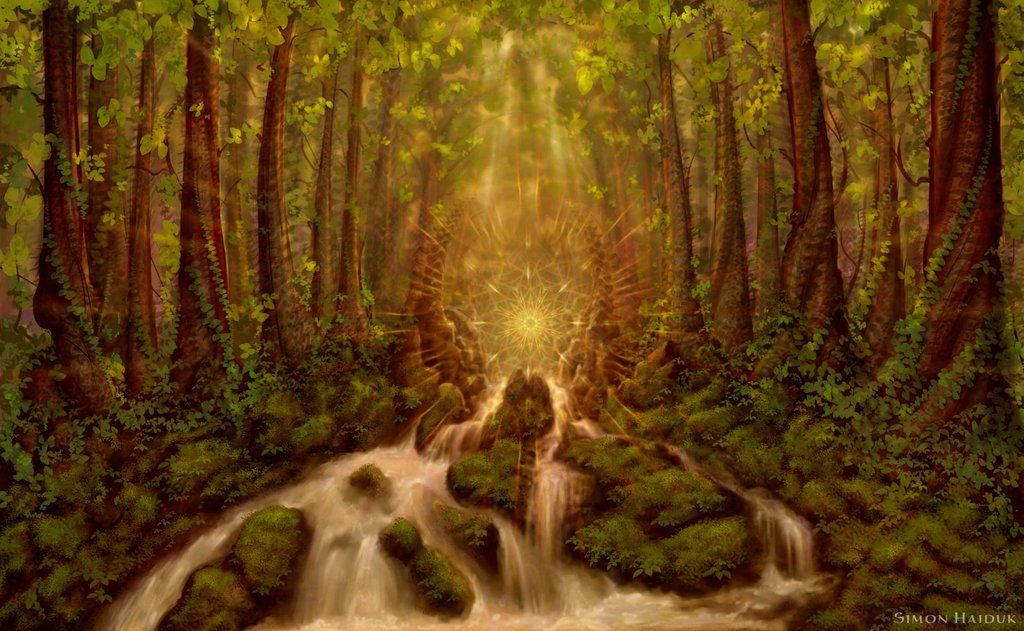
Although this was a classic book by Betty Friedan that spearheaded the second wave feminist movement in the 60’s, I admit that I’ve never actually read it and I just want to respectfully tip my hat to acknowledge it. With that in mind, however, there’s something extremely compelling about the phrase “feminine mystique” that I’ve been thinking about for the past few weeks. It seems to suggest a kind of beautiful and comforting yet elusive seduction that pulls you in and grips the core of your disjointed passions. This oceanic push and pull that somehow revitalizes you even though it can’t be grasped physically or mentally. It’s essence is novel beauty incarnate.
To add a bit of context to this idea, I recently had a nice conversation with a high school friend that fleshed out our understandings of gender identity. As I mentioned in the previous post, I have been watching a lot of videos featuring Jordan Peterson, and he is currently deeply embroiled in a debate about compelled usage of gender pronouns. For some background on my understanding, this video introduces his views about the subject.
In our discussion, my friend hashed out the argument in favor of viewing gender as a spectrum (which is mostly opposed to Peterson’s view) with incredible poise and depth that I had not heard before. Essentially, he said we all have both feminine and masculine tendencies within us, and early on we are socially and culturally influenced to align heavily with our biological sex. Our language influences how we conceptualize the concept of gender, and since we only refer to people in terms of the binary gender pronouns “he” and “she” we are less capable of realizing and expressing the complexity of our identities. Early on in life, our brains are much more plastic and capable of adapting appropriately to the given environmental context, but this plasticity more or less solidifies over the years. If we are conditioned to align with our biological sex, we will have a much higher chance of expressing the characteristics of that gender.
This argument partly validated his point of view in my mind because it gave a potential explanation for why conversion therapy doesn’t work (attempting to convert homosexuals into heterosexuals). Early on in our lives, we are in a much less differentiated state, and the potentials for gender expression are at their peak. In that sense, conversion therapy might be more effective if used during a person’s childhood, but when a person’s gender alignments more or less solidify with age it becomes much more difficult to affect. Even with that speculation, however, we are still nowhere close to understanding the full implications or mechanisms behind it. He did mention a type of fish that can change its gender to fill the position of the dominant male that just died though; I thought that was pretty cool.
Coincidentally, my interest in this subject reached a new height today after I finished reading the book The Passion of the Western Mind by Richard Tarnas. Frankly speaking, this book gave me several mental orgasms that I needed to recover from before continuing on (refractory period is definitely a thing). Broadly speaking, it is a survey of our Western philosophical tradition and how fundamental worldviews and scientific discoveries evolved and led to where we are now. It discusses pivotal figures and beliefs during key moments in history including Greek polytheism, Platonism, Aristotelianism, Roman Catholicism, the Reformation, Renaissance, Scientific Revolution, Romanticism, Modernism, and Postmodernism. Considering each of these eras contains enough depth and complexity to fill the course material of several university-level classes, it was by no means a small feat.
Surprisingly, the scope of knowledge that it dealt with did not diminish the quality of the understanding it elicited. To make it more manageable, he focused on the paradigmatic views of key individuals that reflected developments during each period of time. The individuals included Plato, Aristotle, Augustine, Aquinas, Luther, Ockham, Copernicus, Galileo, Bacon, Descartes, Newton, Rousseau, Berkeley, Hume, Kant, Darwin, Locke, Goethe, Hegel, Marx, Nietzsche, Freud, Jung, and many others. Focusing on people allowed Tarnas to paint pictures of the worlds and ideas these individuals lived in, which shed light on how and why they came about. This made concepts much easier to grasp, thus allowing him to elaborate a fluidly cohesive timeline of history up until the present day. It requires the reader to engage in a kind of intellectual flexibility to see the world from their point of view within their historical context.
Anyway, this book is related because of its unexpected ending. Looking back, he acknowledged that a vast majority of the major figures in the Western tradition have been men. Just looking at the list of people I wrote makes that extremely obvious. Without getting into toxic masculinity and the patriarchy and all that, Tarnas ends the book with this paragraph:
“Today we are experiencing something that looks very much like the death of modern man, indeed that looks very much like the death of Western man. Perhaps the end of “man” himself is at hand. But man is not a goal. Man is something that must be overcome – and fulfilled, in the embrace of the feminine.”
All this adds weight to the idea of the feminine mystique that continues to intrigue me. What is it? What does it look like? Who does it affect? How would this idea be embodied in modern society? Future society? All I can say is… The future looks feminine.
Photo Credit: Simon Haiduk at simonhaiduk.com


Leave a Reply